Early signals from New York & NRF – 3 retail trends in 2026

In early January, we were in New York for NRF as proud sponsors of Retail All-Stars 2026, taking place alongside the National Retail Federation’s Big Show. A week all about learning, connecting, and experiencing what’s next for commerce – together with an amazing group of retailers and partners.
Retail All-Stars brought the Nordic retail ecosystem together in the middle of NYC, with strong presence, sharp conversations, and even a moment on the Times Square billboards. A definite highlight was also the Live Retail All-Stars Podcast at the Swedish Residency, hosted by Jacob Lovén and Hanna Moisander.
With that backdrop, one thing became clear: retail has entered a more focused phase, where proven ideas are being operationalized, and not just discussed.
Here are 3 trends we’re bringing home from NRF 2026:
Trend 1: AI becomes infrastructure – not just a feature
First and foremost, AI was everywhere at NRF. Just as expected. And if you followed the buzz last year, you might be thinking: Wasn’t it everywhere then too...?
The difference this time was the tone. The conversation has clearly moved beyond experimentation and hype. Instead, AI is now discussed as embedded infrastructure, powering discovery, pricing, inventory decisions, customer service, and operations across the entire retail value chain.
One concrete signal of this shift is how quickly AI-powered shopping and search are gaining ground. Retailers are no longer just competing for SEO rankings, but also for visibility inside AI-driven discovery experiences.
Why it matters: In 2026, value won’t come from simply “using AI”, but from how well it’s integrated into everyday retail operations – and how visible your brand is when consumers start delegating decisions to AI.
Action: Start tracking how and where your brand appears in AI-driven search and shopping experiences. Make sure your product data, availability, pricing, and delivery information are structured, accurate, and consistent. When was the last time you searched for your own product or offering in an AI-driven environment?
Trend 2: Payments evolve from transactions to A STRATEGIC FOUNDATION
The second major trend we are taking with us is closely aligned with our core. At NRF, payments were no longer discussed as the final step of the customer journey. Instead, they increasingly appeared as a strategic layer connecting identity, trust, loyalty, and growth. For us at Qliro, this wasn’t exactly a surprise, but it was reassuring to see how clearly this perspective has now reached the broader retail conversation.
As commerce becomes faster, more automated, and more invisible, payments play a bigger role in safeguarding both conversion and customer confidence. Frictionless checkout, smart authentication, and fraud prevention were repeatedly discussed as interconnected priorities.
Why it matters: In 2026, payments won’t just be about completing a purchase. They will be a core part of how retailers build trust, enable repeat purchases, and create seamless experiences across the entire journey.
Action: Look at your payment setup as part of the overall customer experience. Reduce friction where it matters, strengthen security where it counts, and use payments to support loyalty and long-term relationships, not just conversion. Ask yourself: is your payment partner truly aligned with your customer journey, or does it pull attention away from your brand?
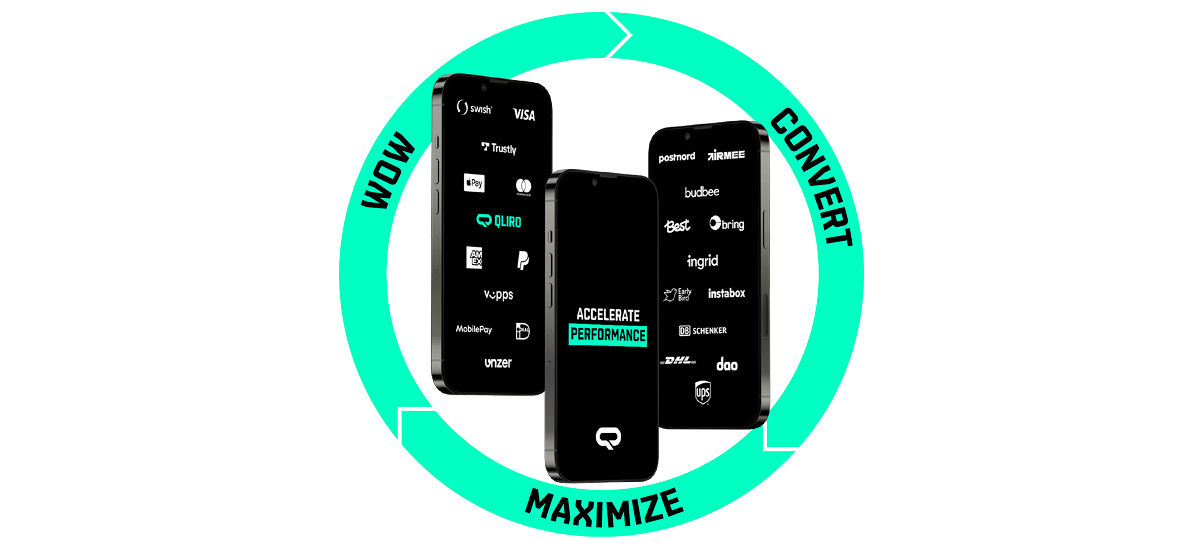
We explore this perspective further in our Flywheel model, which shows how payments can drive growth throughout the customer journey. Learn more here.
Trend 3: Post-purchase EMERGES AS A KEY DRIVER OF GROWTH
The third, and final, key trend we’re bringing home from NRF is the growing importance of what happens after checkout. Delivery, returns, communication, and loyalty were no longer framed as operational afterthoughts, but as strategic levers for retention, margins, and long-term value.
As expectations for speed, transparency, and convenience continue to rise, retailers are placing greater emphasis on designing the full customer journey – not just the moment of conversion. This perspective was especially present throughout Retail All-Stars, where post-purchase experience was repeatedly highlighted as a key differentiator.
Why it matters: In 2026, you won’t win growth at checkout alone. It will be built through the experiences that follow. Shaping trust, repeat behaviour, and customer lifetime value.
Action: Treat post-purchase as an extension of your brand experience. Invest in clear communication, smart self-service, and seamless delivery and returns, and use these moments to strengthen customer relationships.
For more inspiration on how to bring this to life in practice, we explore this further in the WOW part of our Flywheel. Learn more here.
2026: A year of focus and execution
Retail isn’t standing still, and it’s no longer chasing everything at once. Instead, the industry is sharpening its focus on what’s ready to scale.
AI is becoming infrastructure, not experimentation. Payments are evolving into a strategic foundation for trust and growth. And post-purchase experiences are emerging as a key driver of long-term value. Together, these signals point to a more mature phase of retail, where execution, integration, and the full customer journey matter more than ever.
At Qliro, this direction feels both familiar and motivating. Because when payments, trust, and growth work together, commerce becomes not just faster – but smarter.
A special thanks to the fantastic group of Retail All-Stars partners: Ingrid, Voyado Omnium Svensk Handel impact.com Avensia Maze Feedback AS Markmi.ai WAIR Kindly Thuiswinkel.org Hovedorganisasjonen Virke.
Curious how these trends translate into real-world growth?
Let’s continue the conversation and explore how we can turn payments into performance in 2026.