BEYOND THE BUY BUTTON – A MERCHANT'S GUIDE TO MAXIMIZING SALES

Most e-commerce growth conversations focus on one thing. Conversion. And for a good reason. Turning a visitor into a buyer is tough, and merchants who do it well have a real advantage. But the fastest-growing merchants know something others often overlook. The moment someone buys is also your best chance to grow the value of a customer you've already earned.
This guide points out where those opportunities are in the customer journey and how to make the most of them without adding friction or losing trust.
WHAT DOES IT ACTUALLY MEAN TO MAXIMIZE A SALE?
Maximizing a sale means getting the most value from the whole purchase journey. Instead of just asking how to win more customers, it focuses on how to get more from each customer you've already won, from the first product page to long after delivery. In practice, this involves four connected areas:
- Trust – the confidence that makes a customer comfortable enough to buy and to come back.
- Loyalty – whether a buyer becomes a known, repeat customer or stays a one-time stranger.
- Average order value (AOV) – how much a customer spends in a single purchase.
- Margin – how much of that revenue you actually keep once costs like returns are accounted for.
The merchants who succeed at this treat these four parts as a unified journey, rather than separate projects. Each with its own potential. So, let’s go through it together.
STEP 1: CONVERT AS MUCH AS YOU CAN FIRST
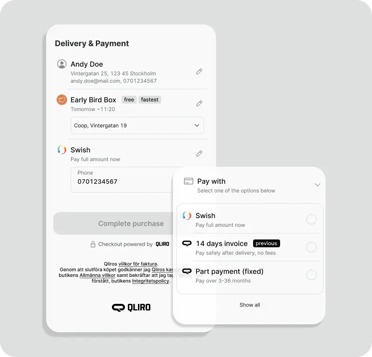 We know. We started this guide by saying that conversion isn’t everything, and that’s true. But the journey we discussed in the previous paragraph begins with conversion. It’s the foundation on which everything else rests, and you can’t maximize a purchase that never happened. Right? With the conversion foundation in place, we can lift our gaze.
Before you do anything else, make sure your checkout works seamlessly. If your checkout has issues, it can quietly undo all the upsell and loyalty efforts, so this is where you should start.
So, why does it really matter? If you improve conversion by even a few percentage points, those gains add up at every step that follows, since every customer you maximize must convert first.
Make sure your conversion foundation is solid:
- Do you offer all the local payment methods your customers expect?
- Is the checkout fast, with prefilled fields and validation that catches mistakes early?
- Can you meet customers wherever they shop – online, in-app, in-store, or via paylink?
STEP 2: BUILD TRUST BEFORE CHECKOUT
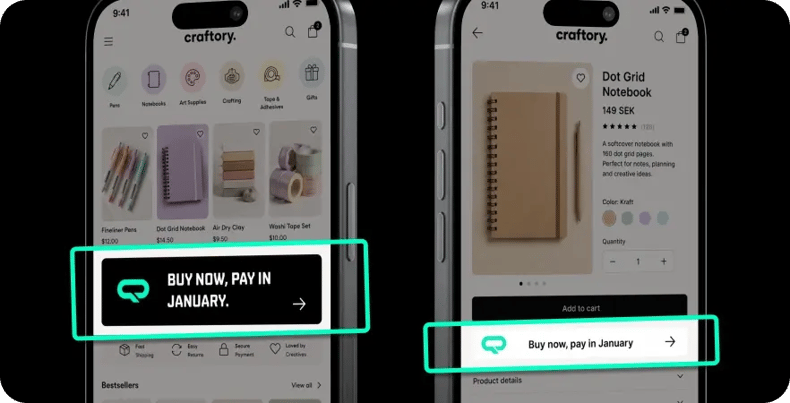
Before a customer gets to the checkout, they're deciding whether to trust you. Trust isn't built at the checkout, it's rather confirmed there. By the time someone reaches the payment step, they've usually already made their decision.
If your flexible payment options only appear at the final step, you've missed the key moment. That moment happened earlier, on the product page, while the customer was quietly considering their own questions. Can I pay the way I want? Can I split this if needed? Do I trust this brand with my card? Answer these questions early to prevent hesitation.
So, why does it really matter? Hesitation is expensive, and most of it happens before checkout. Showing payment options and trusted brands visible early turns uncertainty into confidence.
Make sure you're building trust early enough:
- Do you promote flexible payment options with widgets and banners on product and category pages?
- Do you use recognizable payment brands as trust signals, not just logos in the footer?
- Is your on-site message consistent with what the customer actually gets at the payment step?
On-site messages are a way to show flexible payment options right when customers are still deciding. For example, a retailer might display payment method badges and a 'Pay later with Qliro' banner directly on each product page, so shoppers know immediately they have flexible options available before even reaching the cart. This type of early, visible messaging reassures customers and helps remove purchase barriers.
STEP 3: TURN BUYERS INTO MEMBERS
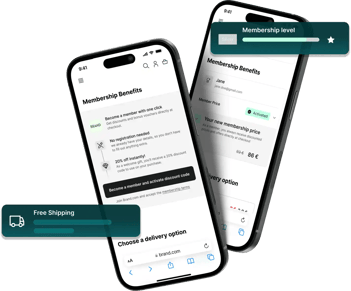 You've earned their trust and they're ready to buy. But the real question is whether this becomes a one-time visit or the start of a relationship. Checkout is the best time to encourage buyers to return. The customer is already engaged, entering their details, and agreeing to buy. Asking them to become members at this point is easy, since signing up takes little extra effort. If you wait until after the purchase, most of that intent disappears.
So, why does it really matter? Getting a new customer costs much more than keeping one you already have. Capturing loyalty at the moment of purchase turns a single transaction into the start of a relationship and helps your growth come from existing customers, not just new ones.
Make sure you capture loyalty at the right moment:
- Is membership sign-up built directly into the checkout, rather than bolted on as a separate step afterward?
- Do you identify returning shoppers automatically and personalize the experience for members?
- Are sign-ups connected to your CRM so the data is usable in real time, not weeks later?
Loyalty sign-up is built into Qliro Checkout, with CRM integration to tools like Voyado and Klaviyo. This way, a single order can become real-time loyalty data you can use right away.
STEP 4: MAKE EVERY ORDER BIGGER
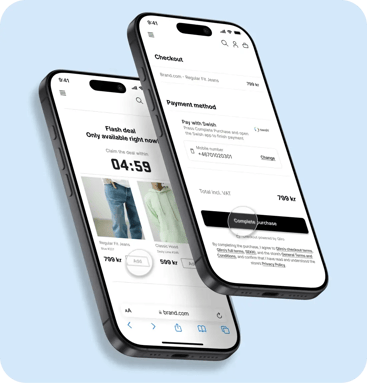
They've converted, they trust you, and they're now a member. The order is placed, but the moment isn't over. The thank-you page is often seen as a dead end – a confirmation, a receipt, or maybe a tracking link. But it's actually the one screen where a customer has just agreed to buy, given their payment details, and trusts you fully. It's probably the highest-intent moment in the whole journey, yet most merchants leave it empty.
A post-purchase upsell turns that dead end into a chance to increase profit. The order is still open, so adding something takes just one click. No need to re-enter card details or go through another checkout. The key is relevance. Suggest something that fits with what they just bought, not a random "you might also like," and you can raise the order value when friction is lowest, and goodwill is highest.
So, why does it really matter? This is the most direct way to increase average order value, and one of the few that adds revenue without extra acquisition cost. The customer is already yours. Every relevant item they add increases your margin on a sale you've already made.
Make sure the thank-you page is working for you:
- Is there a one-click upsell on your order confirmation page available across all payment methods?
- Do your recommendations complement the order, rather than just offering more of the same?
- Are recommendations behavioral or AI-driven so the offer feels helpful rather than random?
At Qliro, we created Upsell 2.0 because the thank-you page was being ignored while customers were most engaged. Qliro merchants using Upsell 2.0 see a proven 15% increase in average order value. Consider suggesting complementary products, limited-time offers, or bundled accessories right after a purchase. Even a simple personalized recommendation based on what the customer just bought.
STEP 5: PROTECT THE MARGINS YOU WIN
You can convert well, build loyalty, and upsell effectively, but still lose profit through returns. Not many build a brand around their returns process, but it's often where your margin disappears. Every return brings shipping, handling, and restocking costs, and a few serial returners can cause more damage than their numbers suggest.
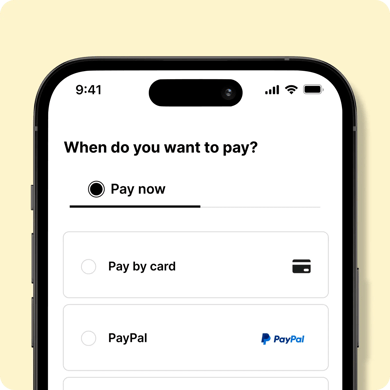 The goal doesn't have to be to stop returning. Most are legitimate, and a generous return policy is part of good customer service. The real goal is to spot the small group of high-risk, low-margin behaviors and respond smartly. With real-time data, you can adjust how buy-now-pay-later is offered to likely serial returners – the payment setup that makes the costly "order five, keep one" pattern easiest – while every other customer keeps paying as usual and never notices a thing.
So, why does it really matter? A sale isn't truly won until it survives the return window. Reducing avoidable returns protects the profit you've earned. It's probably the most overlooking way to improve your bottom line.
Make sure returns aren't eating your margin:
- Do you track return cost as a core margin metric, not an afterthought buried in operations?
- Can you identify high-risk, low-margin return patterns with real-time data rather than blanket rules?
- Have you considered the upside beyond profit? Fewer returns mean less shipping and a lighter footprint.
At Qliro, we see returns as a margin problem that's easy to overlook. Our return optimizer analyzes purchase and return patterns to identify high-risk shoppers, such as those who frequently order multiple items and return most of them or who consistently keep only low-value purchases. By spotting these patterns in real time, we can adjust how BNPL is offered to unprofitable serial returners, protecting your bottom line and reducing unnecessary shipping costs, while letting most customers pay as they prefer.
From a single sale to a growth engine
Maximizing a sale isn't just a feature you turn on or a tactic you copy. It's a change in mindset. Instead of seeing the moment someone buys as the finish line, you see it as the start of new value. Trust makes it easier for customers to buy. Loyalty is captured while intent is high. The order grows on the thank-you page, and margin is protected through the return window.
Each improvement builds on the last, turning a single sale into the beginning of something that keeps paying off – a customer who returns, spends more, and costs less to keep.
Your maximize checklist
✔️ Get conversion right first. It's the foundation for everything else.
✔️ Build trust early by making payment options visible before checkout.
✔️ Capture loyalty at the moment of purchase, not later in a follow-up email.
✔️ Use the thank-you page as a one-click upsell opportunity.
✔️ Protect your margin by adjusting how BNPL is offered to frequent returners.
✔️ Measure what you maximize. You can't see the leaks until you track them.
Good luck 👋
Looking for a growth partner to help you turn payments into performance?
Before you take the next step, take a moment to review your current customer journey using the maximize checklist above. Where are you strongest? Where could you improve? This quick self-assessment will give you clear insights into where Qliro can help you unlock the most value.
Explore the Qliro Flywheel further or reach out to our team to get started.